
Notes on Sri Lanka
45 observations from a fortnight of travel

What follows are my assorted notes from a fortnight spent in Sri Lanka.
A fortnight is long enough to notice a lot, but not long enough to understand very much.
Having explored very little of Asia, I suspect my observations may seem pedestrian to more experienced travellers. Above all, I struggled to distinguish the everyday from the atypical. Is it surprising for a wild elephant to reach into my car window, or to see a crowd of young men righting a toppled tuk-tuk?
Forgive the blurred photographs. I was mostly shooting from a moving car and insufficiently shameless about photographing strangers.
Lennie & the Hundred Acre Isle
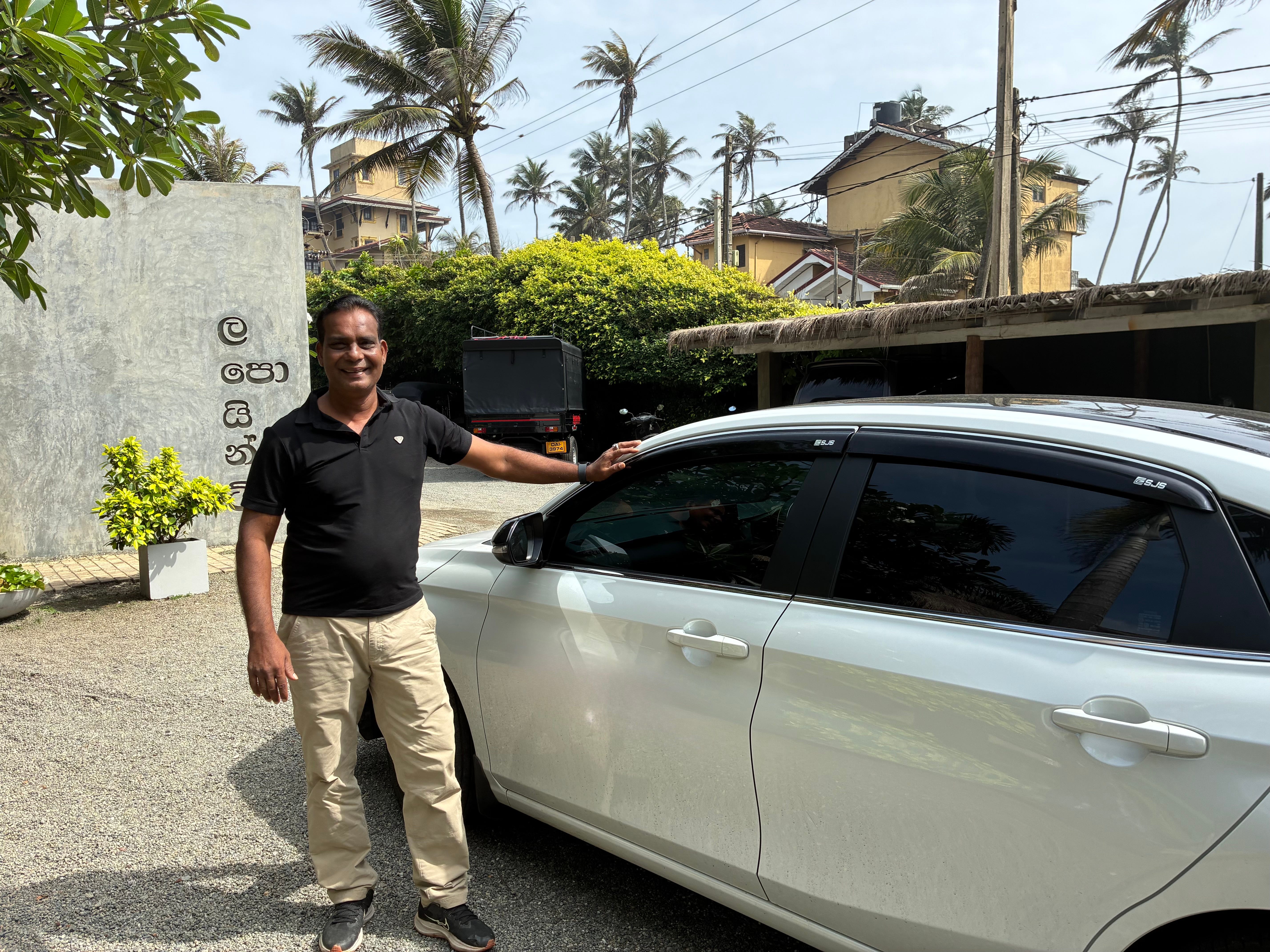
For part of the journey, my guide was an amiable Sinhalese man from the south coast who referred to himself as Lennie. He had the air of an avuncular Winnie the Pooh: smiling, unhurried, and possessed of a benign uncertainty about the nature of the world. Whether I was Piglet or Christopher Robin remains unclear.
Though Sri Lanka is no Hundred Acre Wood, Lennie navigated it with the same equanimity. Whenever I asked about Sri Lankan history or culture, Lennie would smile, ponder for some time, and produce a sentence that had all the shape of an answer but none of the content, like a honey pot with nothing in it. But Lennie’s honey is a spicy pol sambol. I liked him enormously.
Culture & people
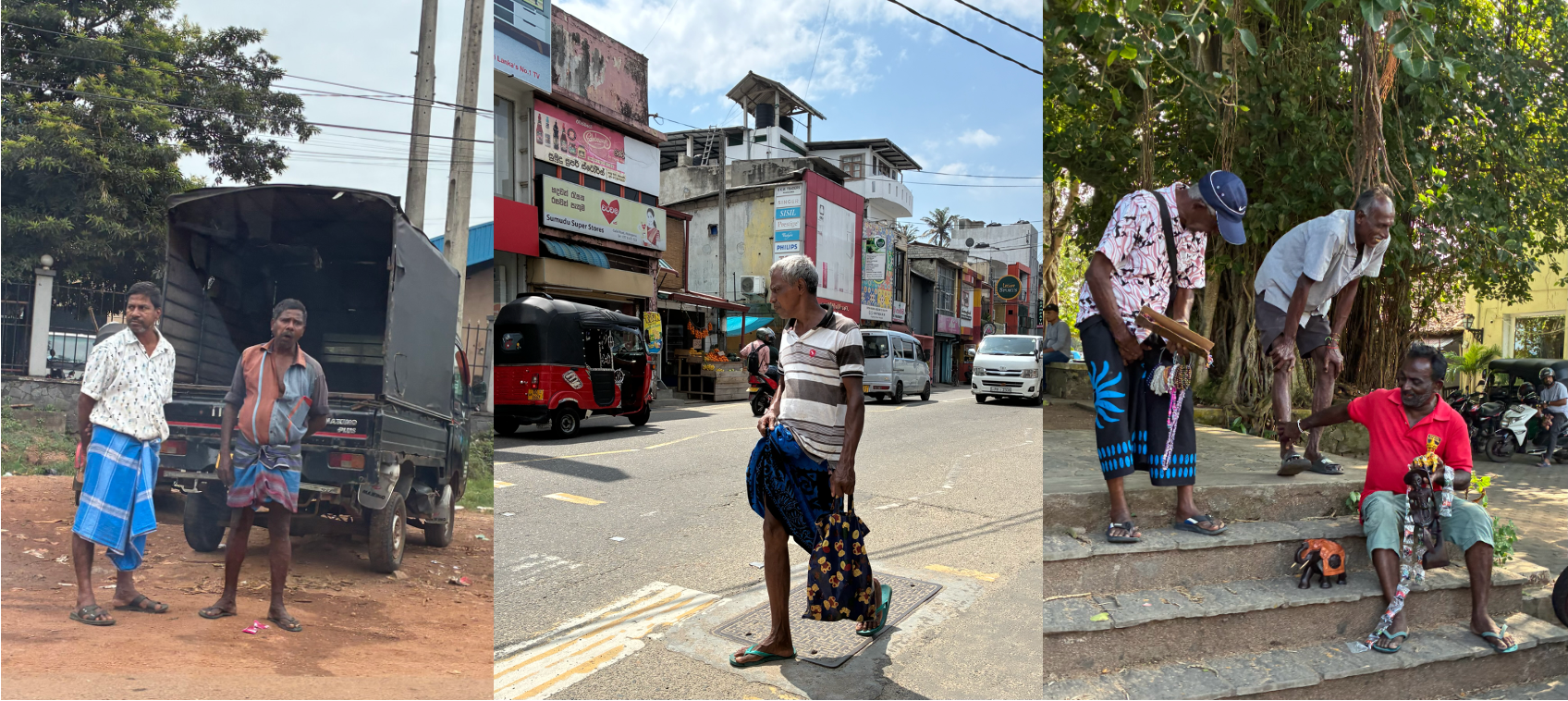
Ethnically, Sri Lanka is roughly three-quarters Sinhalese Buddhist, with Tamil Hindu, Muslim Moor, and Christian minorities making up the rest. These are not abstract categories. They map onto language, dress, diet, and caste.
Sri Lankan people are generally very laid-back, perhaps reflecting a Buddhist outlook on life. Almost no one tried to rip me off, which was surprising after experiences in Turkey and India. Items lost were returned. Exact change was given.
The Sinhalese civilisation is very antique. The Sinhalese are genetically and linguistically North Indian Indo-Aryan. The oldest infrastructure and culture dates back to the 3rd century BC, around the time Alexander’s successors were carving up his empire. By the 12th century, King Parakramabahu was constructing enormous man-made lakes at Polonnaruwa that still function today, while England was tearing itself apart in the Anarchy between Stephen and Matilda.
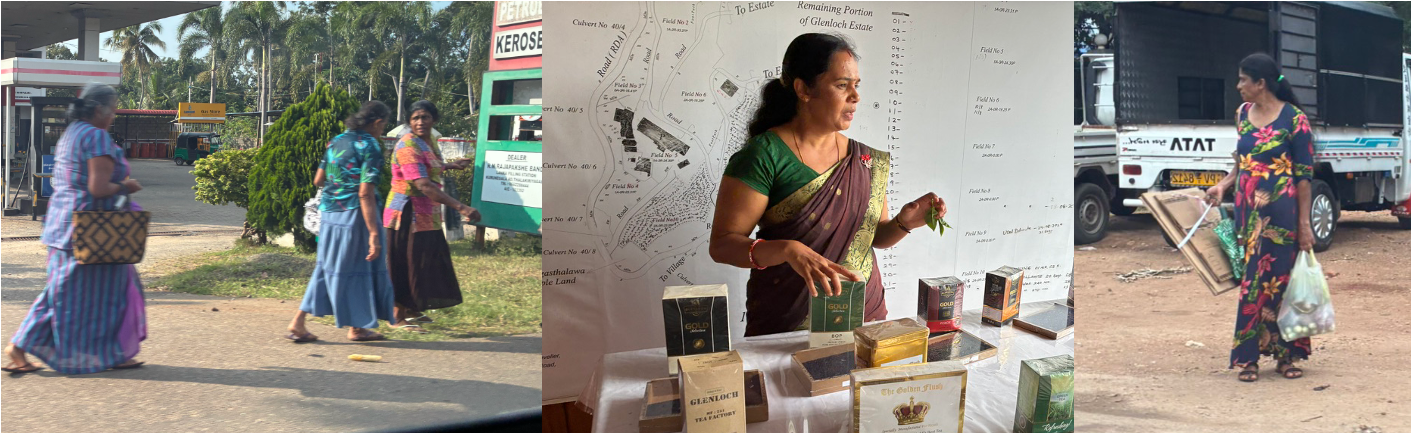
Tamils have been on the island for millennia. The Tamils are South Indian Dravidians: darker skin tone, more rigid caste system, traditional Hindu clothing. The Chola dynasty's invasion from South India around 1017 was a conquest, not an arrival. The ethnic fault line has endured the ensuing millennium culminating most recently in a 26-year civil war between 1983-2009. That conflict produced the LTTE (Tamil Tigers) and the brief inauspicious Indian military intervention that ended with the assassination of Rajiv Gandhi by a Tamil suicide bomber.

There is a significant Muslim Arab Moor minority in the central region. “Moor” is an archaic European term for Muslims that has stuck. They descend from coastal Arab traders forced to the inland Kandyan Kingdom by Portuguese colonisation in the 16th century. The word “serendipity” derives from “Serendip”, a Persian name for the island.
A brief history
The Fort at Galle is a microcosm of the island’s layered colonial history: Portuguese, Dutch, British, and now a place where a Chinese restaurant advertises in English, Chinese, and Russian. Further along the coast, Hambantota Port was built more recently with Chinese money the government failed to repay; it is now “leased” to China for 99 years.
The maritime museum inside the fort was charmingly deserted. The exhibits boasted captions that were magnificently long-winded. The contents ranged from Parthian amphorae recovered at Anuradhapura to Tang Dynasty jars from Jaffna.

The British Empire conquered the last independent Sinhalese kingdom in 1815 after taking control of the region (then Ceylon) during the Napoleonic Wars. The British legacy is everywhere. Sri Lankans drive on the correct side of the road, play cricket very well, use proper three-pin power sockets, and are very keen on tea.
Nuwara Eliya, roughly 6,000 feet up in the central highlands was the most striking example of the British imperial legacy: a mock-Tudor post office, Victorian lampposts, manicured lawns. It is a Home Counties village transplanted into the tropics.
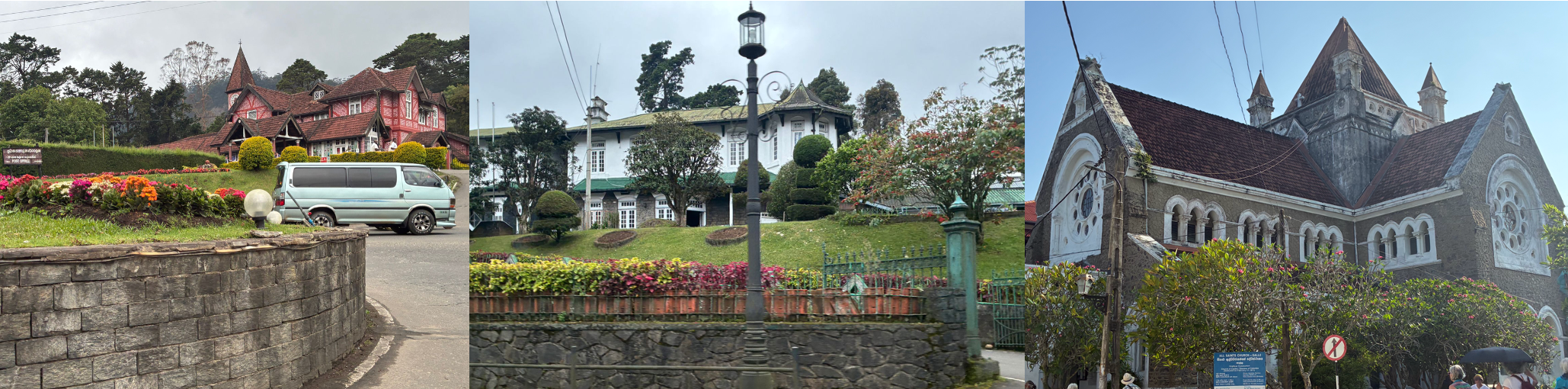
Sri Lanka has endured several crises over the last two decades. The 2004 tsunami killed over 30,000 people. The civil war only ended in 2009. In 2022, there was a sovereign default after the government ran out of foreign exchange, fuel ran out, the president fled. Visiting in 2026, it is remarkable how little of this is immediately visible. The roads function, the shops are stocked, the power stays on. It is only once you know the signs: a watermark on a wall, a half-rebuilt hotel, the dislocation between tourist and local prices.
Buddhism
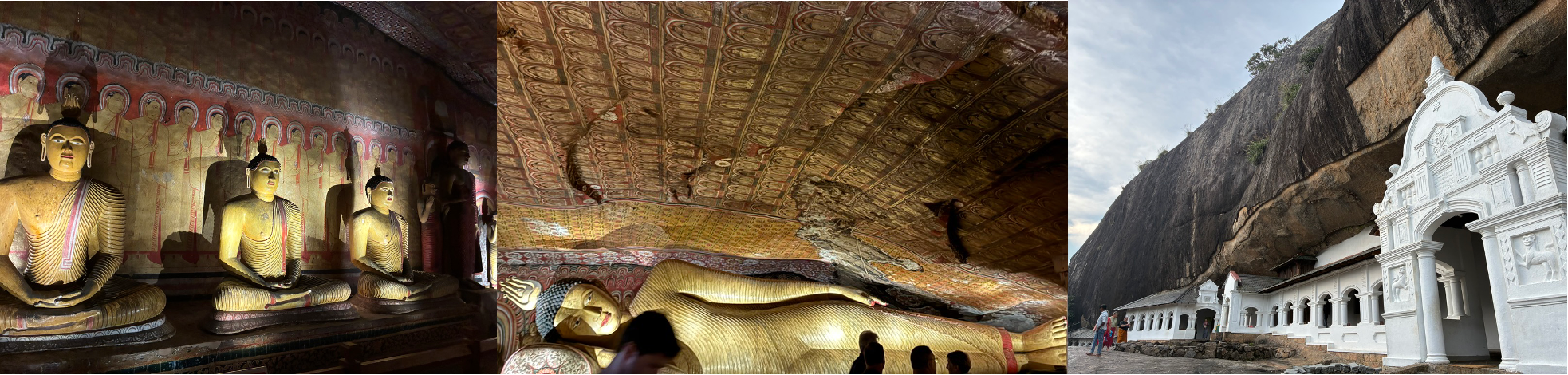
Sri Lankan Buddhism is Theravada, the older school (as distinct from the Mahayana traditions of East Asia and Tibet). There are roughly 15,000 monks in the country. I encountered several dozen in varying shades of orange and red robes worn toga-style with heads shaved. The air near temples carries the scent of incense and frangipani in roughly equal measure.
In the 5th century, a monk called Mahanama wrote the Mahavamsa, a chronicle of the Sinhalese from Prince Vijaya’s arrival in the 6th century BC written in Pali. The comparison to the Venerable Bede’s Ecclesiastical History of the English written in Latin in 8th-century Northumbria leapt out to me: two monks on islands at the edges of their civilisational worlds, writing national founding myths in sacred languages.
Natural landscape

The country’s natural beauty is exceptional, especially once you leave the road network. Dusty lowland scrub gives way to luminous green paddy fields, then red-clay cuttings, then dense rainforest, then vast man-made lakes dating back millennia. Higher still, tea plantations climb impossibly steep hillsides into the cool, misty highlands.
Sigiriya is particularly remarkable: a 5th-century fortress on top of a vast rock outcrop, with frescoes, water gardens, and a lion-paw gateway carved into the cliff face. Fifth-century monks climbed the dizzying height daily, reportedly without incident. By contrast, amongst the elderly European tourists ahead of me, I counted two panic attacks and a possible cardiac arrest.
The south coast is still authentically Sri Lanka and distinctly beautiful with palm-fringed, golden beaches, but has the beginnings of a tourist overlay: surf schools, yoga retreats, smoothie bowls, young Europeans on gap years. The incongruity of extremely demure Sri Lankan women alongside Western nomads in minimalistic bikinis is striking.
I contributed enthusiastically to the foreign encroachment by joining a surf camp in Ahangama. The camp was run and inhabited by Scandinavians of conspicuous good health. The hostel was beautifully designed, but tragically committed to its sustainability credentials, principally achieved by changing towels and sheets once a week. The planet was grateful; I was not.
Rainstorms arrive without warning, even in February. One moment you are in blinding sunshine, the next the sky has collapsed. They pass in twenty minutes and leave everything steaming.
Food & drink
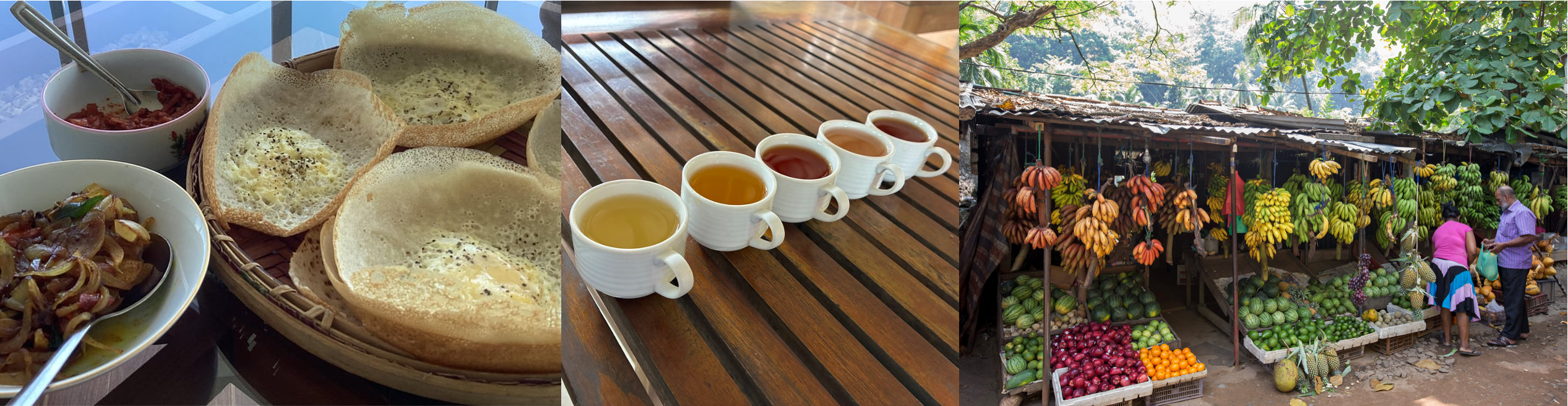
Rice and curry is the staple. I was particularly enamoured with breadfruit and mango curries. Fish is most common and meat is widely available. Meals were cheap, filling, and (when Lennie was choosing), extraordinarily spicy.
Hoppers, the bowl-shaped pancakes from fermented rice flour and coconut milk, are served plain or with an egg cracked into the centre. String hoppers are fine noodle nests with coconut sambol. Kottu roti is chopped roti stir-fried on a hot griddle.
Roadside fruit stalls are abundant: pyramids of bananas in several varieties, coconuts, breadfruit, mangoes, melons, and, hanging in a drooping bunch alongside the fruit, inflated bags of crisps that look from a distance like an additional variety of exotic produce.
Tea is offered widely, strong and often sweetened with condensed milk. Contrary to my assumption, most Sri Lankans drink alcohol. Several of my tuk-tuk drivers swigged from wine bottles while driving. Presumably these were being used as water bottles, but the styles of driving displayed did nothing to clarify the matter.
Agriculture & industry
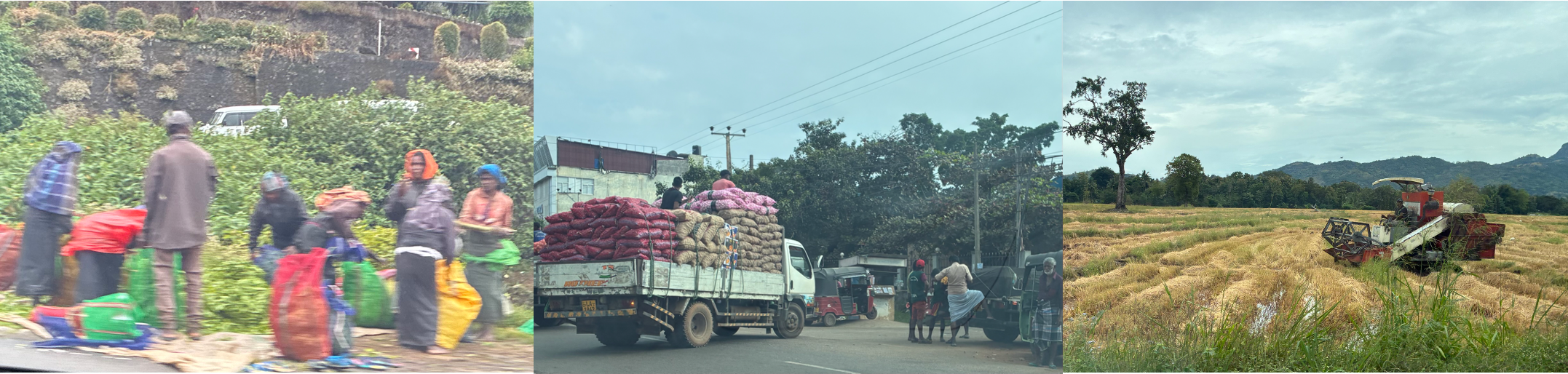
Trucks laden with produce queue at roadside depots and agriculture is everywhere although often unmechanised. In the paddy fields, a harvesting machine works one plot while the next is still cut by hand. The most important exports include tea (a British introduction), rubber (likewise), cinnamon (traded for millennia), coconut, and garments. The spice gardens around Matale are part educational tour, part sales pitch.
Tea deserves its own note. Sri Lanka is the world’s fourth-largest producer. The tea plantations in the hill country have names that read like a Victorian share register: Taylor’s, Rothschild’s, and Glenloch. Sri Lanka’s per capita consumption (about 1.2 kg dry leaf per year) remains lower than Britain’s.
The plantation workers are visibly different from the Sinhalese majority population. They are Malaiyaha Tamils, descendants of labourers brought from South India by the British under indentured servitude. At independence in 1948, the new government stripped them of citizenship entirely, rendering several hundred thousand individuals stateless. They were re-enfranchised in the 1980s.
Roads, transport, and population density
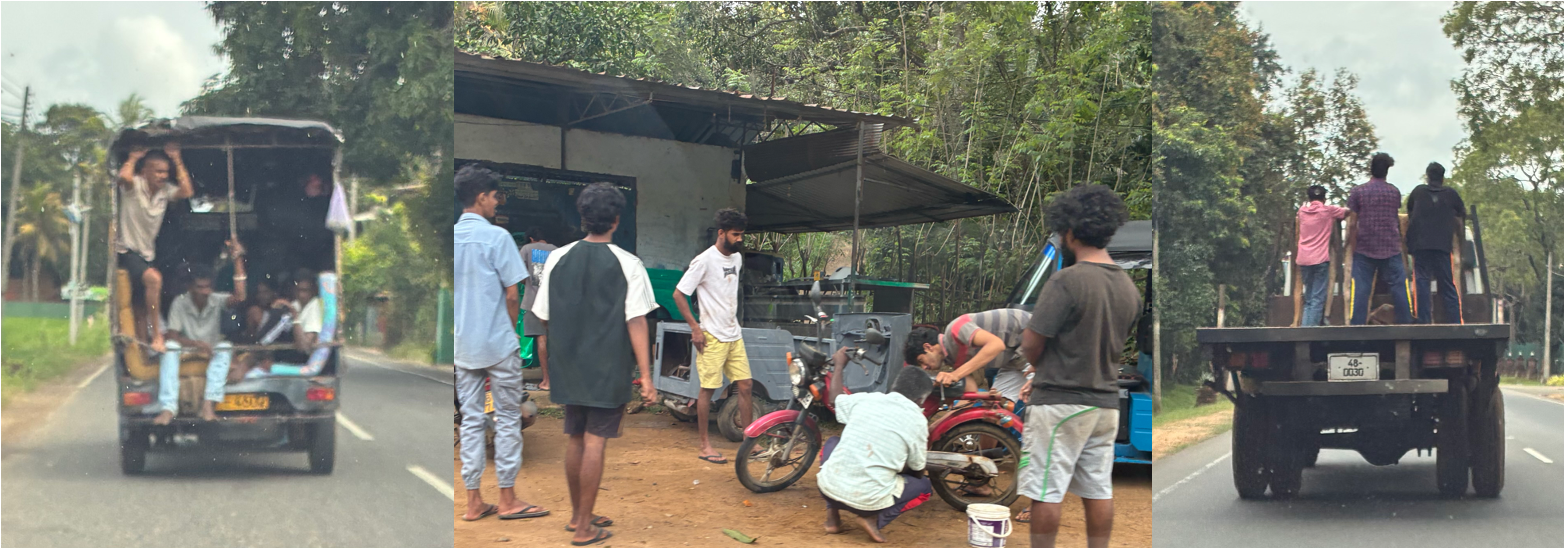
Sri Lanka is one of the most densely populated countries on earth: 22 million people on an island a quarter the size of Britain. The settlement pattern is continuous ribbon development along every road. There is almost no stretch of main road not lined on both sides with houses, shops, vendors, temples, and power lines. In Sri Lanka, you are never more than thirty seconds from someone trying to sell you something.
The ribbon settlement development means power lines track every road. The result: 99.5% of households have grid electricity, a remarkable achievement for a country with a GDP per capita of $4,500.
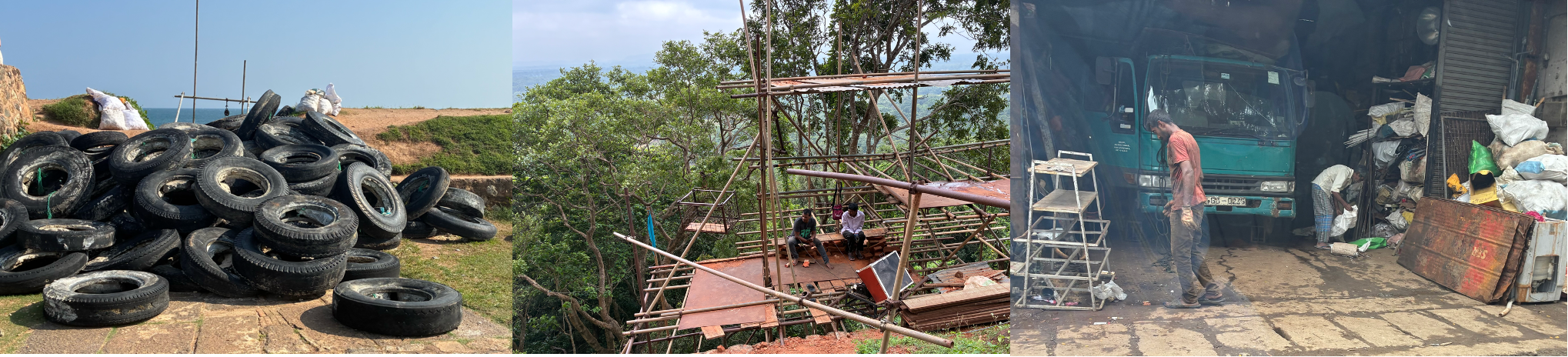
The roadside economy extends beyond food stalls. Every few hundred metres: a tyre shop, a welding operation, a furniture workshop, or an unexplained pile of vehicle parts organised by a system known only to the owner. On the roadside, a lot of local people, particularly older men, sit and observe. It is still unclear to me whether they are waiting for anything in particular.
Health and safety, in the Western sense, is virtually unknown. Scaffolding hangs precipitously off cliffs and buildings. Live electrical wires dangle at head height in the street.
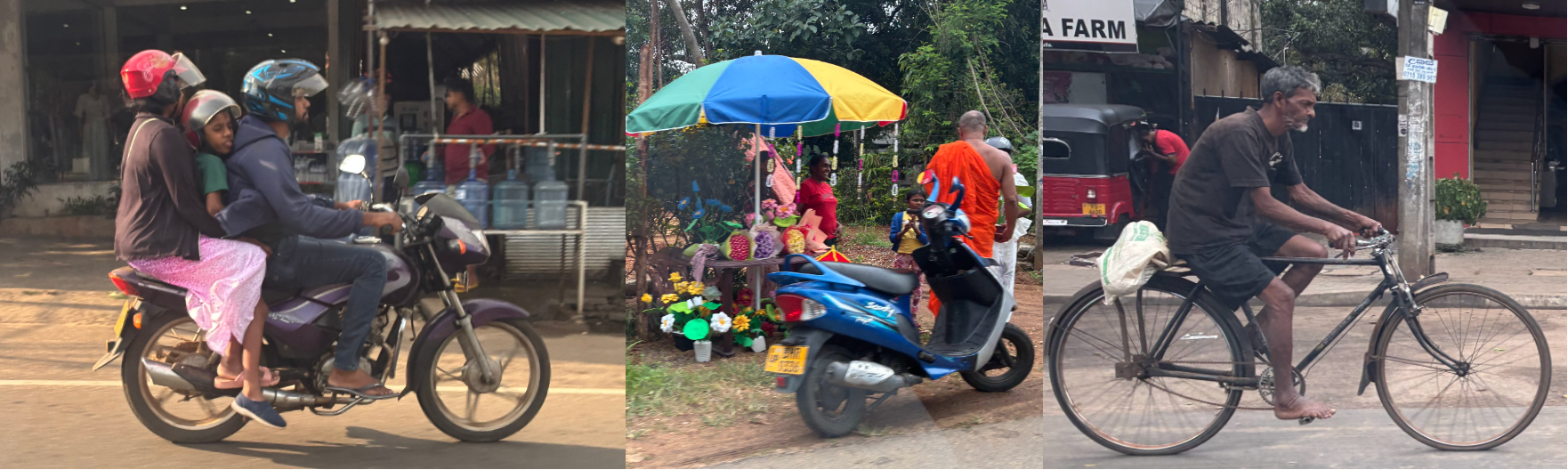
Driving norms result in lane discipline, signalling, and safe following distances being treated as aspirational. One horn beep indicates: “I am overtaking you.” Two beeps convey: “I am overtaking you very fast.” A sustained blast means: “I have committed to this manoeuvre and whatever happens next is no longer entirely within my control.”
In terms of vehicles, on any given stretch of road there are tuk-tuks, motorbikes carrying entire families, bicycles, vans crammed with standing passengers, buses, new SUVs, ancient trucks, the occasional bullock cart. Add to these dogs sleeping in the road, monkeys darting across, cats watching from the verge, and occasionally a farmer who has expropriated half the carriageway to dry rice in the sun. Everyone coexists in a state of negotiated chaos that seems terrifying for the first hour and then becomes the inevitable reality of the road, and you stop noticing it the way you stop noticing weather, until an almighty rainstorm, or bus, ploughs towards you.
Speaking of buses, the Lanka Ashok Leyland models left a deep impression as they hurtled past blasting their horns. Red ones are state-run services, white for schools, blue and multicoloured for private operators.
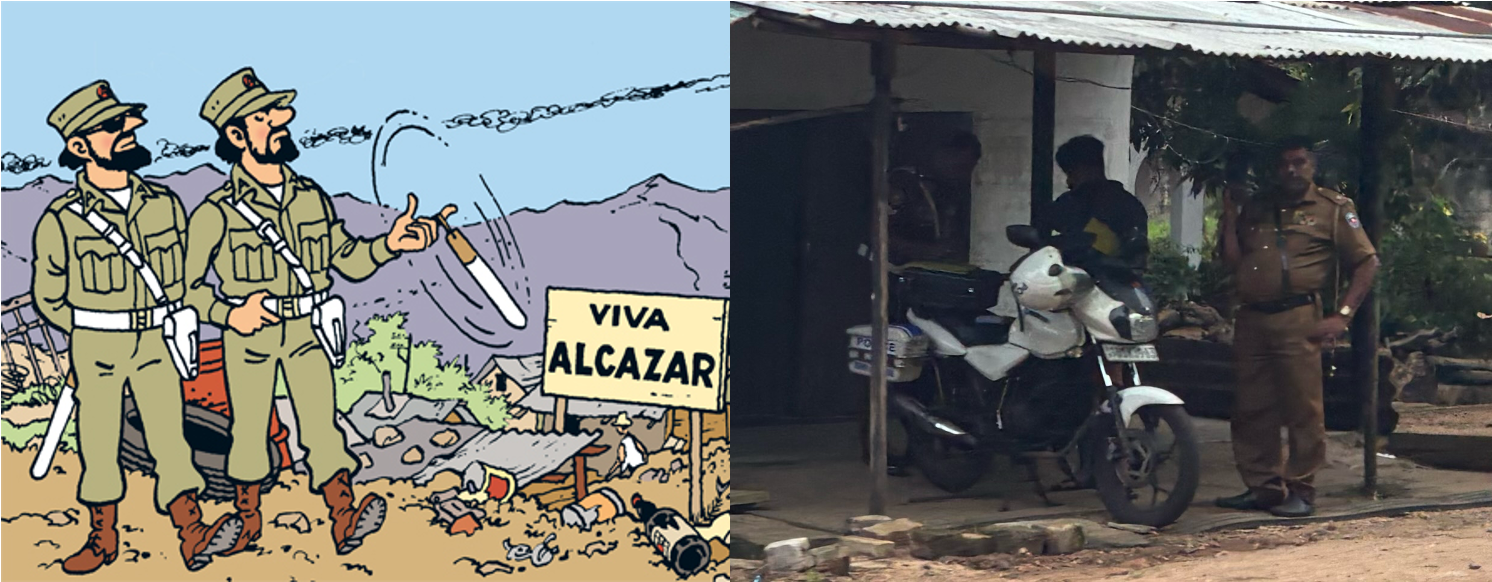
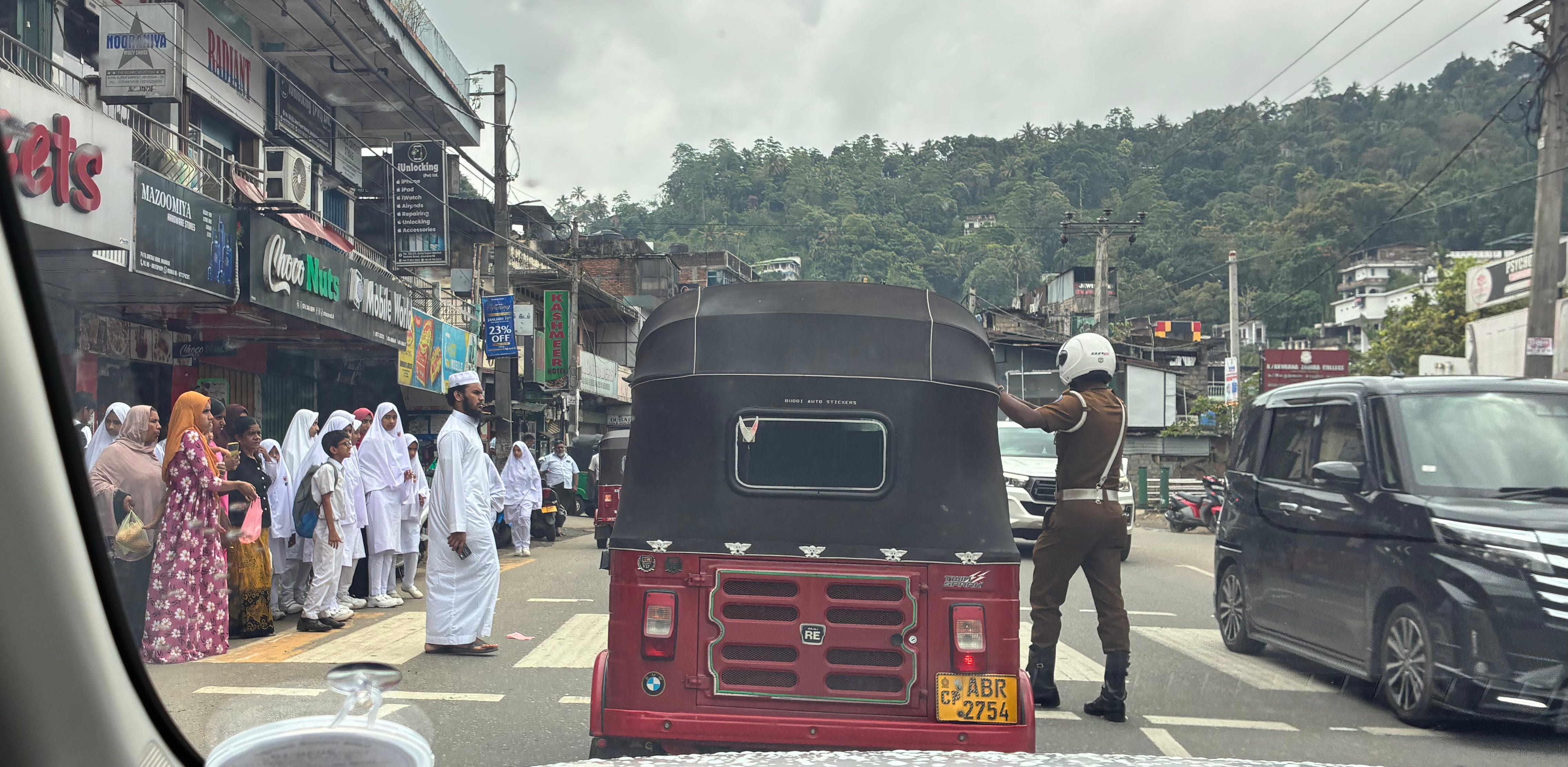
Traffic police are everywhere and always in pairs. They sport generalissimo peaked caps with moustaches to match. I was reminded of the military police from various fictional states in Hergé’s Tintin. Lennie was wary of them and diplomatically intimated that they were predisposed towards soliciting unofficial payments.
The few tolled expressways are funded by Japanese and Chinese development loans and feel like a different country altogether: empty, smooth, eerily quiet.
The scenic hill-country train from Kandy to Ella is supposedly one of the great railway journeys of the world: doors open, tea plantations falling away beneath you. November’s landslides had wiped out parts of the line, so I saw the region from winding roads instead.
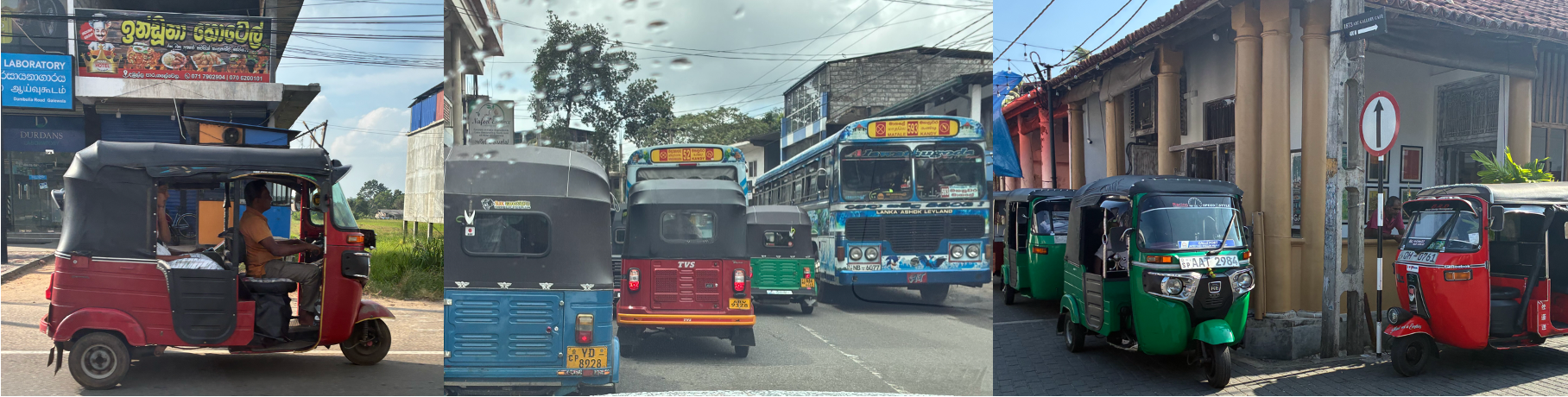
There are 1.2 million registered tuk-tuks for a country of roughly five million households. No last-mile mass transit exists, so tuk-tuks are the transport network. Ownership enables a form of financial independence: vehicle paid off on loans, income enough to support a family. They are overwhelmingly Indian Bajaj models, decorated according to taste: religious symbols, mottos of uncertain provenance, and, with surprising frequency, skull-and-crossbones badges in the style of Prussian hussars. Lennie could not explain the skulls.
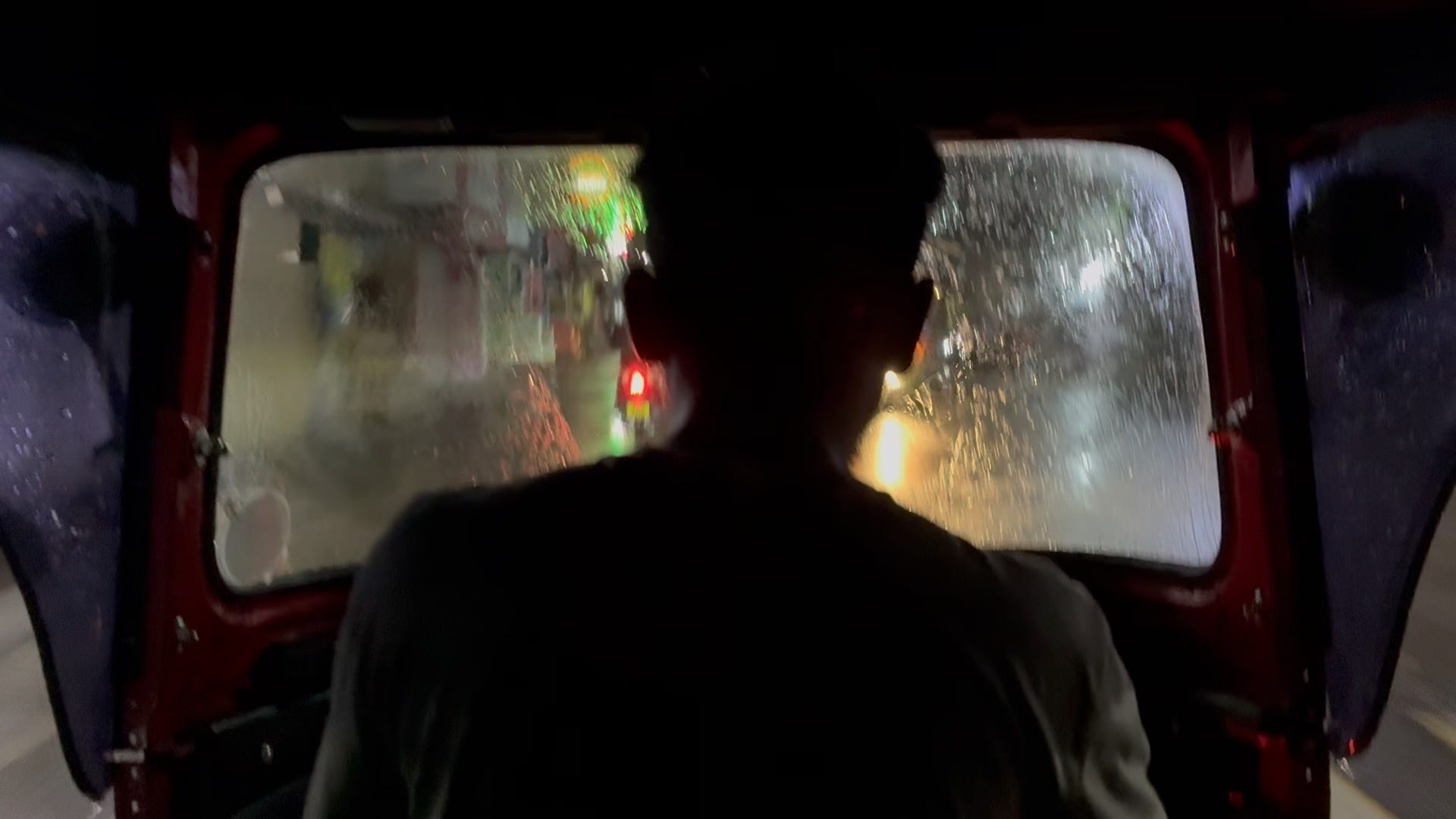
Tuk-tuk pricing is its own field of anthropology. Without a meter, the price is determined by a brief negotiation. The driver adds a tourist premium, the passenger attempts a counter-offer, and both arrive at a figure within about thirty seconds that satisfies neither completely.
Bakery delivery tuk-tuks announce themselves by playing a tinny electronic “Für Elise” on a loop through a loudspeaker. This is called choon paan, “tune bread.” I often heard it from my accommodation, drifting across a rice paddy at dawn or dusk.
Daily life & wildlife
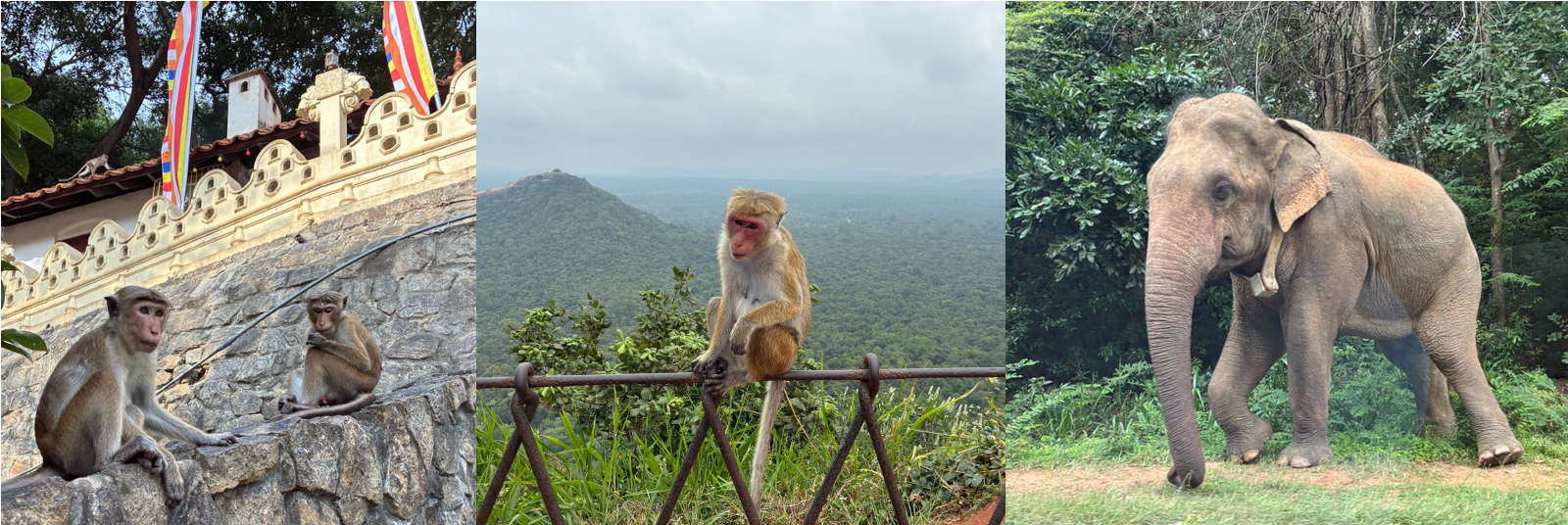
Notable amongst wild animals are Sri Lanka’s roughly 10,000 wild elephants but there are many other species, not least the macaques, langurs, and mongooses. Memorably, during the course of my stay, a land monitor happily lounged by the pool next to me for an afternoon and a small tree snake fell on me in the outdoor shower.
On clothing: all schoolchildren wear white, intended to erase visible class and caste difference. You see them commuting home at midday. In Kandy, Muslim girls in white burqas walked alongside boys carrying cricket bats. Older men wear sarongs; younger men wear trousers. The transition appears to happen around fifty, overnight.
Air quality is not great. Rubbish burned openly, Lanka Ashok Leyland buses pour black diesel smoke from their side exhausts directly onto pedestrians. And incense from every temple. The combination, cut with frangipani and damp vegetation, is the smell of the country.
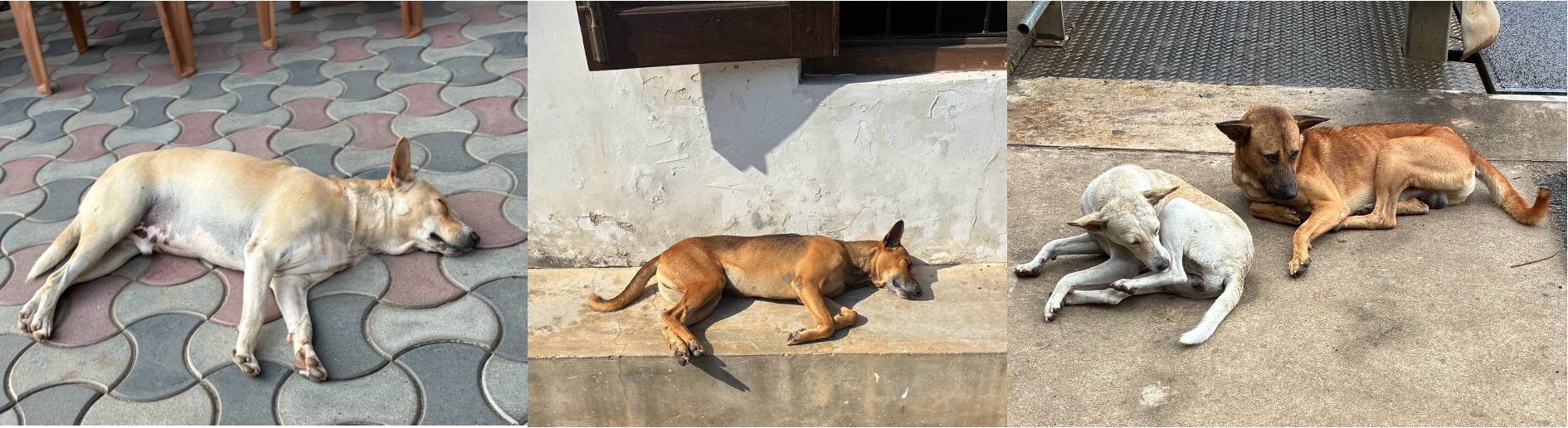
The stray dogs merit their own study: every dog appears to have devolved toward an Ur-dog or platonic canine form. Medium-sized, tan colour, short-haired, nondescript, sleeping in the middle of the road with the serene confidence that traffic will go around them. It does.
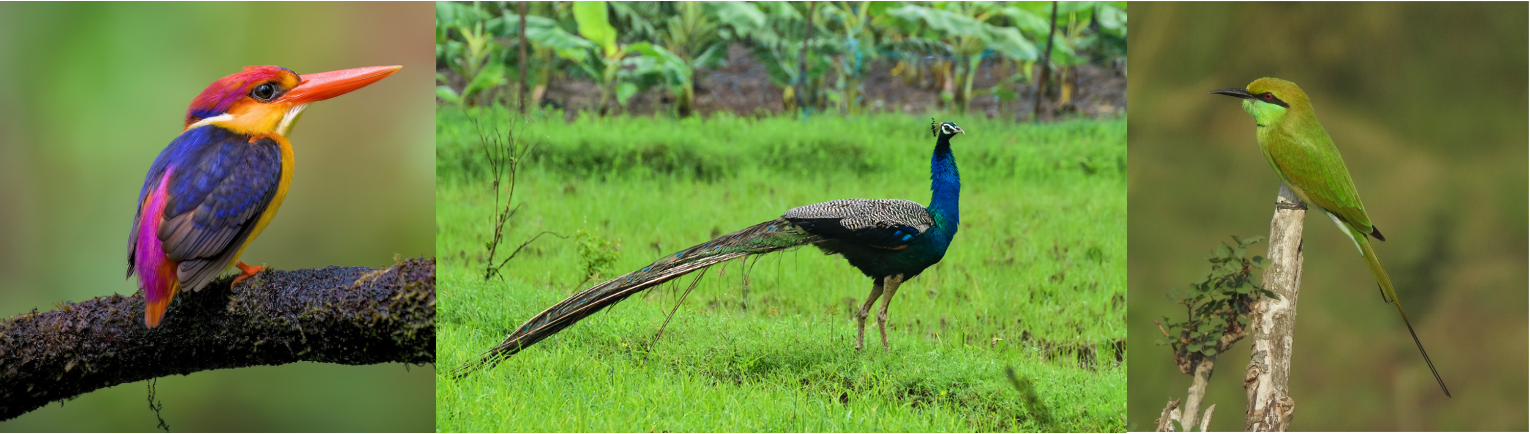
The birdwatching was a highlight for me. As an amateur, I often rely on Merlin, a sort of Shazam for birdsong. The app came into its own here. Peacocks produce a sound somewhere between a cat being strangled and a car alarm. The koel trills a loud and abrupt two-note call. I particularly admired the white egrets standing on the backs of bison and elephants in the rice paddies. The kingfishers, silent and serene, were the most striking birds. The bee-eaters, flitting through the undergrowth, were the most enchanting.
Final night in Negombo
My final night was spent in a hotel in Negombo run by a retired British expat called Paul, formerly an electrical engineering consultant in China and Russia, who had married a Sri Lankan. Paul had the relaxed fatalism of a man who has lived in enough difficult countries to know things will work out, just not the way you expect.
Conspicuously, the hotel was still under construction and I was the only guest. It transpired that, during the recent November flooding, Paul had offered a room to one local family. Word spread and he ended up with almost fifty local people wading across the fields to shelter in his multi-storey concrete building while their single-storey homes filled with water. The stream beside the hotel was fast-moving, mosquito-infested, and beautiful during the dawn chorus. At dusk, the bats replaced the birds, wheeling silently overhead.
On my return, Lennie messaged to ask whether I had enjoyed Sri Lanka. I responded that I had enjoyed it very much, but felt that I had only scratched the surface. After some time, he replied with a smiley face followed by a photograph of his lunch.
Postscript:
After sharing this piece, a friend who knows the country better offered some colourful additions.
He described the coastal train from Colombo to Galle, where the sea laps against the rails, as the most beautiful journey of his life. He also recalled sitting with Western backpackers who were praising how harmonious Sri Lanka was, how everyone just got along, while the one-armed hostel owner who had survived the siege of Jaffna served their drinks. He confirmed my impression that visible ethnic tension is rare, even in Jaffna: no murals, no martyrs’ shrines, nothing like Belfast or Bilbao. The military remained in former LTTE areas after 2009, and the government has not been shy with anti-terror powers. Likewise, he highlighted Arugam Bay (which was out of season during my visit) as practically a colony of post-service Israelis, complete with Hebrew menus and October 7th stickers.
Like many others, he worried about Balification. I suspect that Sri Lanka’s foreign ownership restrictions offer some protection, but the real brake has been the country’s habit of periodic catastrophe: tsunami, civil war, sovereign default. Every time tourism builds momentum, something knocks it back. Whether that counts as a blessing depends on your perspective.
Format inspired by Ed West on Vietnam, Kvetch on Mexico, Will Manidis on Oman, Sophie on the Horn of Africa
Great read! I laughed out loud at your description of the peacock calls.
It never occurred to me before that Sinhala is the southernmost native Indo-European language.